The end of financial neutrality and the rise of the cryptographic moat
How weaponized payment networks are forcing investors to secure true bearer assets
5 March 2026 • 3 min read
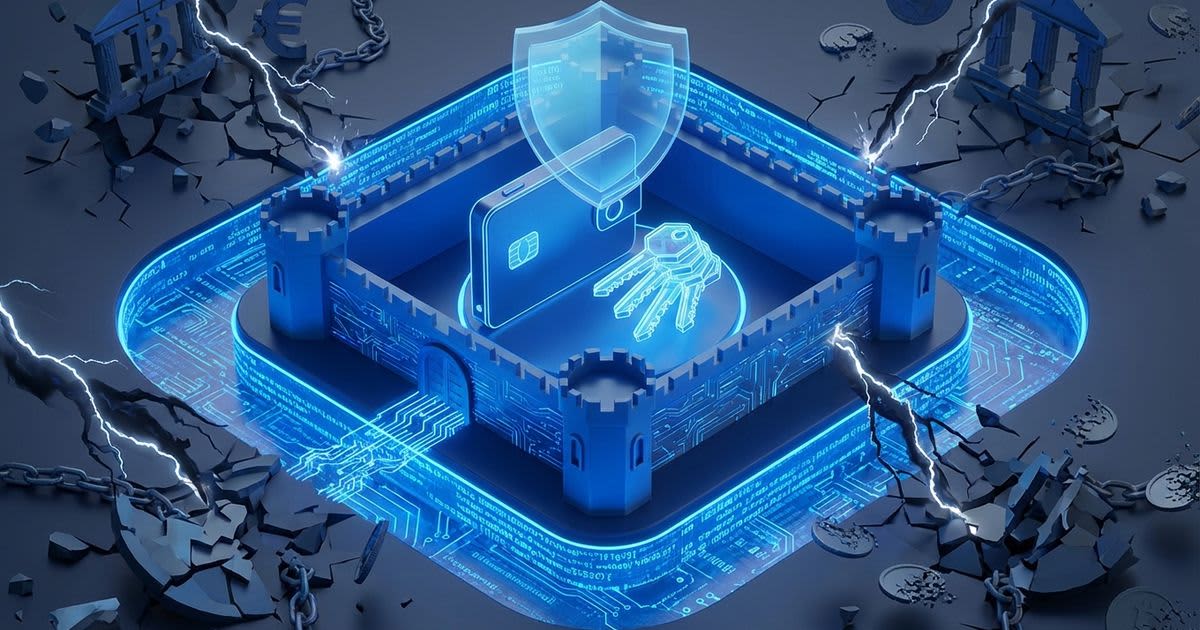
When Microsoft briefly suspended cloud infrastructure for India's Nayara Energy in 2025, it appeared to be a narrow compliance dispute. It was actually a quiet preview of the new macroeconomic reality. By March 2026, the balkanization of the global economy has accelerated from diplomatic theory to brutal market action. Global flashpoints (like the blockade of the Strait of Hormuz) have thoroughly weaponized the very architecture of international trade. For the modern Indian investor positioned squarely between Eastern and Western financial spheres, the definition of property rights is undergoing a radical shift.
The illusion of permissioned wealth
Traditional safety nets like offshore equities and foreign currency reserves are increasingly subject to arbitrary capture. The recent acceleration of aggressive sanctions and capital controls worldwide reveals a disturbing truth for anyone holding international brokerage accounts. Those accounts are nothing more than conditional IOUs. Your portfolio is simply a database entry on a centralized ledger, completely dependent on the political goodwill of the jurisdiction hosting it. Regulatory bodies like the UK Office of Financial Sanctions Implementation are actively targeting financial firms for cross-border breaches, tightening the compliance net around global payment networks. If a competing power decides your local jurisdiction is on the wrong side of a political fault line, your offshore wealth can be frozen with a single keystroke.
This systemic fragility is forcing capital to migrate from trust-based networks to math-based ownership. Holding cryptographic keys has completely shed its cypherpunk origins. It is now an essential portfolio hedge and a profound macroeconomic stance. During the intense military escalations of early 2026, institutional desks violently liquidated traditional equities to cover margin calls. Meanwhile, sophisticated capital quietly secured bearer assets that remain totally immune to sovereign interference.
Sovereign boundaries in a fractured economy
True self-custody creates a hard, cryptographic boundary around your wealth. When you secure your digital assets offline with dedicated hardware, you deliberately opt out of easily seized digital ledgers. The Financial Action Task Force is currently escalating warnings regarding alternative payment rails, and the US Senate has effectively blocked the issuance of a digital dollar until at least 2030. State actors are hoarding control over fiat gateways. In this restrictive environment, a hardware wallet is not merely a technical security tool. It mathematically guarantees that no clearinghouse, bank, or political bloc can revoke your access to the global market.
Equity investors are finally recognizing the danger of platform capture. The international system was built for frictionless interdependence, but that same interdependence is now weaponized to enforce compliance. Relying on a custodian means you do not actually own the asset. You only own a heavily surveilled promise to pay. Hardware-based self-custody operates as the ultimate insurance policy against geopolitical overreach. It strips away the counterparty risk of a balkanized global order and replaces political permission with cryptographic proof.
Related posts



The great monetary fracture as Europe digitizes fiat and BRICS hoards gold
25 March 2026 • 4 min read


Beyond Bitcoin: Using Your Ledger or Trezor to Secure Your Digital Identity and Emails
30 January 2026 • 4 min read

The great algorithmic capital flight as EU AI enforcement and US debt collide
13 June 2026 • 4 min read