How the 2026 midterms and weaponized tariffs are driving a massive crypto and gold divergence
As H.R. 5334 threatens staggering trade penalties ahead of the November elections, capital is fleeing toward hard metals and decentralized financial networks.
5 October 2026 • 4 min read
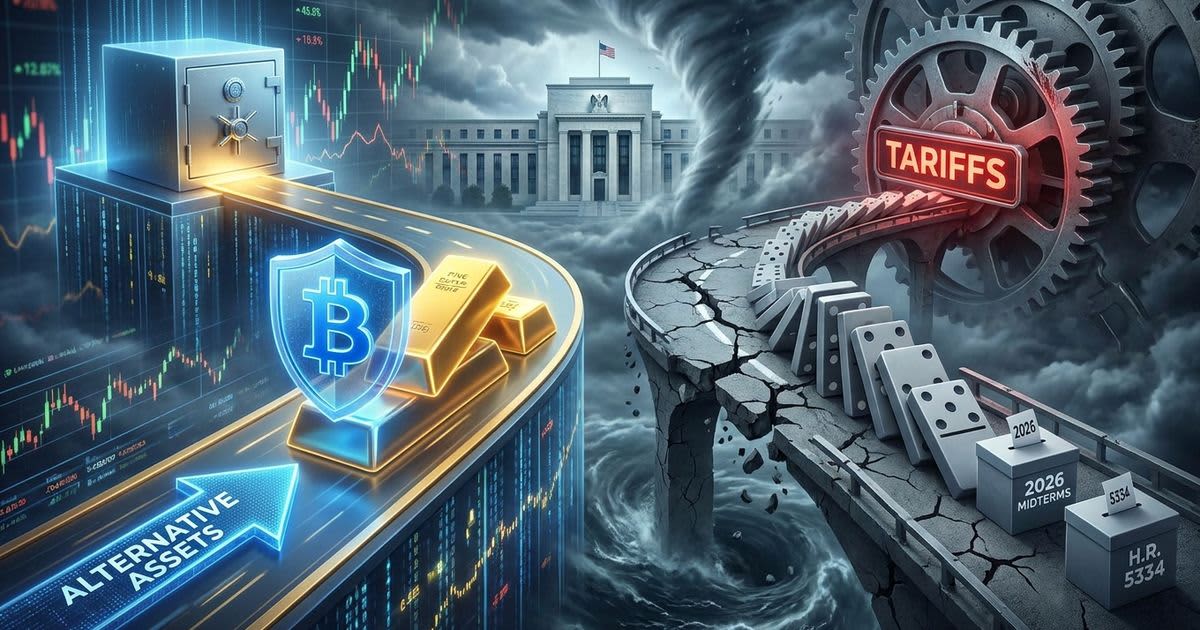
October has opened with a harsh reality for traditional equity markets. The Federal Reserve just ratcheted borrowing costs to a restrictive 3.75 to 4.00 percent range, and Washington is weeks away from a deeply polarized midterm election. Capital is already moving. Global compliance teams are currently scrambling to digest the implications of a new sanctions bill that threatens to rewrite international trade routes overnight. In response, a massive market divergence is unfolding. Investors are abandoning vulnerable legacy equities in favor of the decentralized infrastructure of digital assets and the historical safety of physical gold.
Weaponized trade and the November stakes
On November 3, voters will decide the balance of power in Washington. Donald Trump is campaigning heavily to preserve the Republican Senate majority while Democrats pour resources into flipping deep-red districts. The immediate market shock, however, is legislative rather than electoral. The Lindsey O. Graham Sanctioning Russia and Iran Act (H.R. 5334) is moving rapidly toward an October 18 deadline.
This bill introduces staggering 500 percent tariffs on Russian goods. For legal experts and supply chain operators, the compliance friction is immense. Global trade routes are freezing as multinational corporations calculate the penalty risks of accidental exposure. This level of geopolitical sanctioning creates a legal uncertainty that traditional equities actively punish. When borders become economic weapons, institutional capital immediately looks for assets that exist outside of sovereign control.
The monetary policy trap
The Federal Reserve has cornered itself ahead of the elections. The Federal Open Market Committee meets on October 27 and 28, just days before voters head to the polls. This critical meeting arrives immediately before the release of third-quarter GDP figures and Personal Consumption Expenditures inflation data.
Fed Chair Jerome Powell and his colleagues pushed the federal funds rate to a tight 3.75 to 4.00 percent range in September. Higher borrowing costs are choking corporate margins at the exact moment election anxiety is peaking. Equities are caught in this crossfire. Investors face the reality of an extended period of expensive capital coupled with the potential for legislative gridlock if the midterms produce a divided government. A lame-duck presidency or a split Congress historically stalls domestic growth initiatives, effectively killing the appeal of cyclical stocks.
Capital flight to permissionless networks
This macro anxiety explains the sudden outperformance of parallel financial systems. Gold is holding its ground as the ultimate geopolitical hedge, absorbing institutional cash fleeing the tariff threats. The real growth story is playing out in the digital economy.
Bitcoin is holding strong near $86,000 as institutional capital continues to flow heavily into spot ETFs. Wall Street is treating the asset as a highly liquid sanctuary from Washington's trade wars. Privacy advocates and security experts are watching this shift closely. At the same time, the Ethereum network is preparing for its highly anticipated Glamsterdam upgrade.
Decentralized finance is actively building the infrastructure that legacy markets are currently struggling to maintain. Decentralized PayFi networks are already testing alternative crypto-to-bank payment rails. These systems offer permissionless infrastructure that completely bypasses the legal friction introduced by bills like H.R. 5334. Retail traders, global macro funds, and corporate compliance teams are realizing that when traditional financial rails become weaponized, decentralized architecture provides the only reliable exit.
Related posts

Global markets ignore geopolitical fractures as gold remonetizes and Europe prepares to purge crypto
22 June 2026 • 3 min read

The April peace rally is masking a permanent shift in global capital preservation
17 April 2026 • 4 min read



The 2026 macro trilemma as AI regulation and stablecoin settlements fracture global liquidity
28 May 2026 • 3 min read