The fiat yield illusion and why self-custody is the last remaining arbitrage for the Indian investor
Deconstructing the mathematical reality of domestic inflation, punitive tax structures, and the inevitable migration to cryptographic bearer assets.
4 March 2026 • 4 min read

The Indian rupee breached the 90 mark against the US dollar in late 2025. For the domestic investor, this single macroeconomic data point destroys the mathematical foundation of traditional wealth preservation. When the State Bank of India offers a 6.8 percent yield on a one-year fixed deposit, it feels like safe harbor. Yet, once you adjust for a 30 percent marginal income tax and an annual currency depreciation of over 5 percent against the dollar, that safe yield instantly turns into a negative real return. You are not earning interest. You are subsidizing fiat liquidity drains.
Traditional alternatives offer little shelter. In 2025, nearly 79 percent of actively traded BSE stocks failed to even beat the base fixed deposit rate. Physical metals like gold and silver have seen sustained demand as safe-haven assets amid global uncertainties, but they carry immense logistical friction, physical storage risks, and domestic import duties that eat into your spread. This leaves a massive void for capital looking for absolute preservation.
By 2026, the global institutionalization of digital assets has reached a historic peak. Wall Street holds Bitcoin on balance sheets, and sovereign wealth funds openly accumulate cryptographic scarcity. But the Indian macroeconomic reality forces a highly specific domestic playbook. The local tax regime enforces a flat 30 percent tax on digital asset gains, coupled with a punitive 1 percent Tax Deducted at Source (TDS) on every single transaction. This framework is explicitly designed to kill high-frequency trading. Every time you swap a token, you bleed liquidity directly to the state.
Therefore, the rational investor must adapt. The local policy environment effectively mandates a long-term holding pattern. Trading is mathematically suicidal. The only remaining arbitrage is time, and the only viable execution method is hardware-secured self-custody.
As a security-first firm, Etherbit recognizes that hardware custody has evolved. It is no longer merely a cybersecurity measure against exchange hacks or phishing. It is now an aggressive macro-financial strategy. When you buy a highly liquid digital bearer asset and immediately move it to a cold storage device, you execute the only rational move available in this restrictive environment.
First, you halt the 1 percent TDS bleed. Because you are no longer trading, your capital compound rate is not repeatedly taxed at the transaction level. Second, you step outside the localized inflation and currency depreciation loop. You anchor your purchasing power to a globally recognized, mathematically scarce asset that trades against the dollar, offsetting the rupee's structural decline. Third, you eliminate counterparty risk.
In a system where traditional yields are fundamentally negative, counterparty risk is an uncompensated hazard. Leaving assets on a centralized exchange means you are trusting an entity that operates within the very fiat system actively draining your wealth. Exchanges are honeypots for regulatory capture and liquidity crises. A hardware wallet bypasses this entirely. It transforms a digital ledger entry into a physical bearer instrument. If you hold the seed phrase offline on a dedicated device, you possess absolute, cryptographically enforced ownership.
The fiat yield illusion relies on nominal numbers to mask real losses. True wealth preservation requires opting out of that math. Securing digital scarcity in cold storage is the final frontier for the Indian investor willing to trade localized friction for global, uncompromising sovereignty.
Related posts
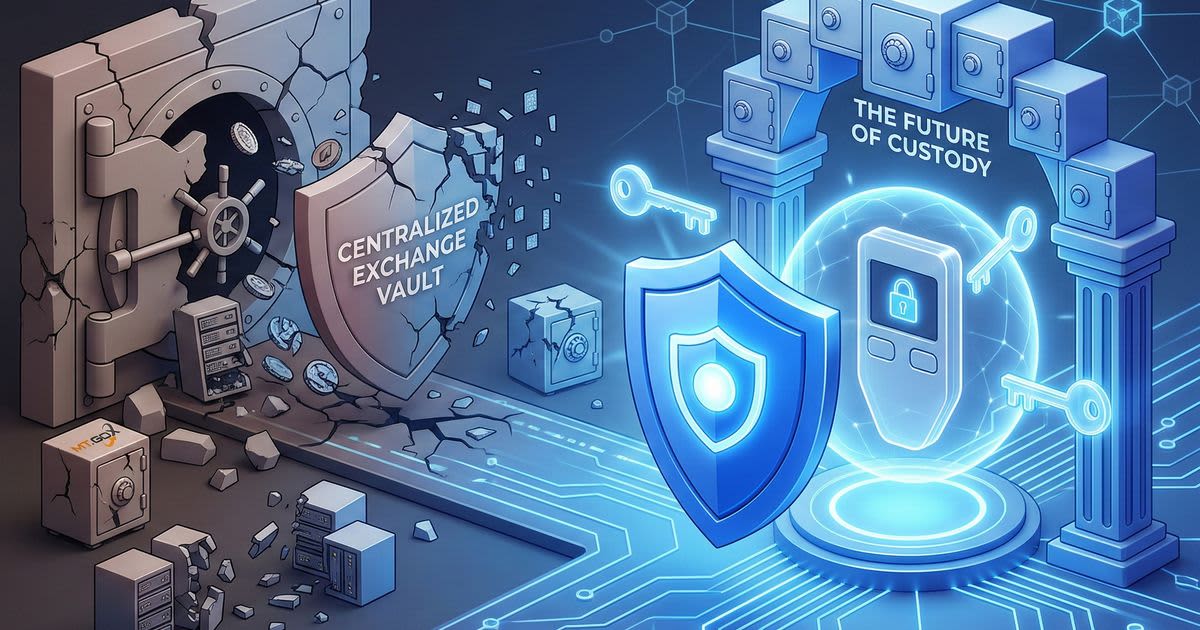
From Mt. Gox to Now: A Visual History of Why Self-Custody Became Non-Negotiable
4 January 2026 • 4 min read

Capital flight accelerates into gold and privacy networks as sovereign digital identity laws mature
3 June 2026 • 4 min read

Institutions hoard digital commodities and hard metals as sovereign debt fractures global markets
21 August 2026 • 3 min read

Surviving the programmable money era requires moving your assets off the grid
3 March 2026 • 5 min read

Artificial intelligence computing demands collide with global commodity hoarding
13 September 2026 • 3 min read